Remembering
Gordon Vowles
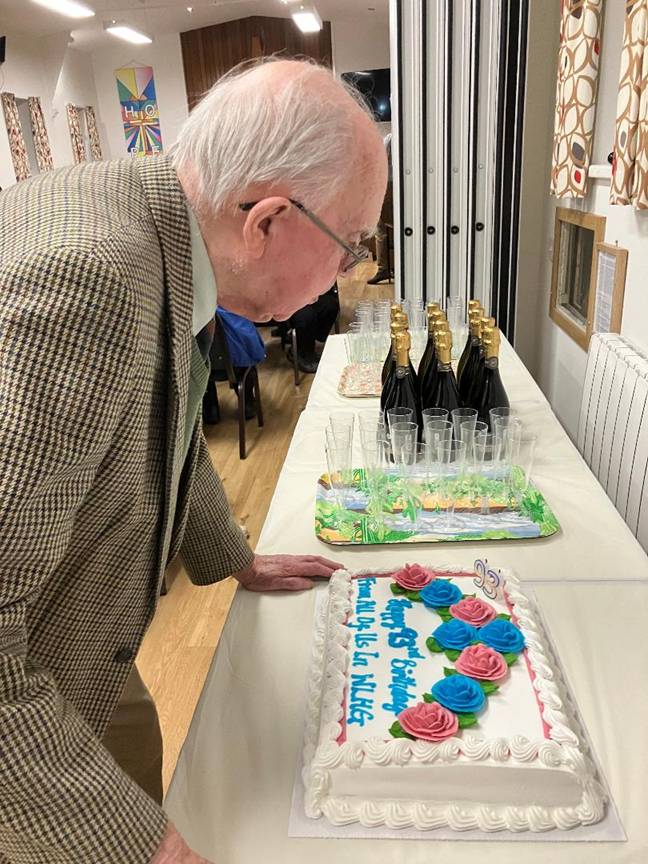
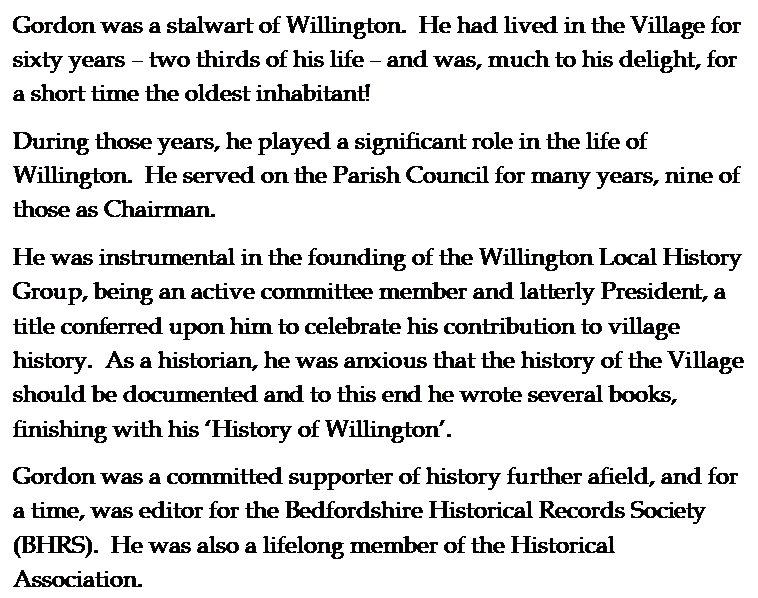 Gordon Vowles {1932 ~ 2025}
He was a Trustee of the
Friends of St Lawrence – he always said that he may not have spent much time inside
at services, but that he was always outside holding up the building! He called
himself a buttress of the church. A
notable contribution was to provide a board listing all the vicars of the
parish.
Before Gordon came to
Willington, bringing with him his wife Sylvia and two children, Hilary and
Stephen, he had had a variety of jobs – all of them in education in one form or
another. What brought him to Willington
was being appointed as Deputy Director of Education for - what was then - the
whole of Bedfordshire. He commanded the
support and loyalty of many work colleagues and was always a delighted
participant in reunions, some of which took place here at the Crown or involved
a visit to the cricket in Northampton.
Gordon leaves behind many
relatives and his family were an important part of his life. He was also proud
of his Hertfordshire roots. We remember
him as a keen gardener, enthusiastic bridge player, well informed traveller and
prolific reader. On visits to his house,
you were always assured of a warm welcome and good conversation. Typically, he would turn off the snooker or
Parliament channel on his TV on your arrival.
We will miss him.
Rob Bollington
and Sue Harland
The Parish of Willington in Bedfordshire
Gordon Vowles 2025
Gordon Vowles wrote this
book during the last year of his long life.
He wrote it because he was committed to sharing what he had learned
about the history of Willington. It is a
village he had lived in for sixty years, some two thirds of his life.
During his time in the
village, he read widely and talked to many people. We know he was very appreciative of all the
ideas and information that people shared with him so generously. He saw this book as a tribute to them and to
a village he grew to love.
Knowing that time was
running out for him, he left instructions with his daughter, Hilary to make
sure the book was published after his death.
It is the last of several publications he produced about the village and
summarises what he knew and the ideas and theories he developed.
We know that had time and
health permitted he would have added to it further. Indeed, the book ends somewhat abruptly but
perhaps fittingly with a quotation from a fellow villager he admired, Bernard
West. In fact, Bernard West was one of
those who with Gordon founded the Willington Local History Group and it was
really the formation of that group that marked the start of Gordon’s foray into
village history.
Sue Harland and Rob Bollington
Our
thanks to those who provided the following tributes:
‘He
was such a kind, generous gentleman, who had led such a full and amazing life, his presence in the village will be greatly missed.’
‘I
have fond memories of him as an intelligent and witty conversation partner,
always ready to engage in intellectual and philosophical discussions, often on
the topics of history and religion. I
enjoyed working with him as part of the Friends of St Lawrence’s and
appreciated his generosity of spirit.’
‘When
Gordon spoke to (the) History Group some time ago with such detail it was
obvious that he had a varied and very interesting life, a life to be proud
of.’
‘He
was a lovely man and such a pleasure to talk to.’
‘He was one of the first
people who spoke to us when we moved to Willington, he was such a charming,
erudite, gentle man who gave so much to us all and will be sadly missed.
I last spoke to him at the
History Group AGM when he was sad that he had reluctantly just given up his
car. He was sure that he was ready to die now, having lived such a full life.
What a blessing to die at home.
How fortunate are we that
up till the end he was able to make a contribution to our lives and I look
forward to reading his last book.
God Bless Gordon.’
Mary Slevin
‘Sad news, but it sounds
like it was the right time and way to go.
Gordon contributed a lot to
the village as part of the Parish Council as well as the History Group. He
wrote many articles for the Villager, so [a eulogy] would be very appropriate
to mark his passing.’
Shane Horlock
‘A sad goodbye to one of
life's true gentlemen
God bless you Gordon’
Paul Phipp
‘Thank you for telling us.
It sounds like a good way to end a wonderful life.
Seeing him at our recent
AGM, will be a nostalgic memory for all of us.
Please send my sympathies
to his family’
Ali Cross
‘So sorry to
hear the sad news about Gordon.
He was such a kind, generous gentleman, who had led such a full and amazing life, his presence in the village will be greatly missed.
Please do pass on my
condolences to his family.’
Philippa Burrough
‘Please tell the family
that I felt Gordon was such a lovely man, and I had the privilege of knowing
him for many years. I will miss his happy greeting whenever we met. Life will
be so much duller without him.’
Margaret
Carpenter
‘How truly
sad! He was a lovely man and
one with much wisdom.’
Johannah Hickton
‘Obviously, I have known
him for many years, although not closely. He has always had Willington close to
his heart and contributed immensely. I have no knowledge of the family, but
would you kindly pass on my kind thoughts of sadness for their loss. Gordon was
an English Gentleman and he will be truly missed but not ever forgotten.’
Eileen Carter
‘Sincere condolences, he
will be greatly missed.’
John Gibbons
‘A very
knowledgeable man and always lovely to be with.’
Mike &
Valerie Martin
‘We were sad to hear of
Gordon’s death but pleased that he achieved his goal of being the oldest
resident in Willington.
When Gordon spoke to our
History Group some time ago with such detail it was obvious that he had a
varied and very interesting life, a life to be proud of. We will all miss
him and his knowledge.’
Malcolm and
Diane Beat
‘I didn’t know Gordon very
well but he was a lovely man and such a pleasure to talk to.’
Maureen Strutt
You
Can Also Listen To
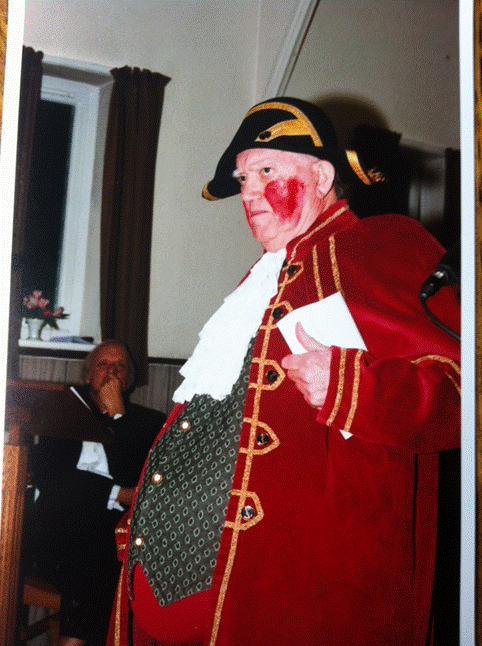
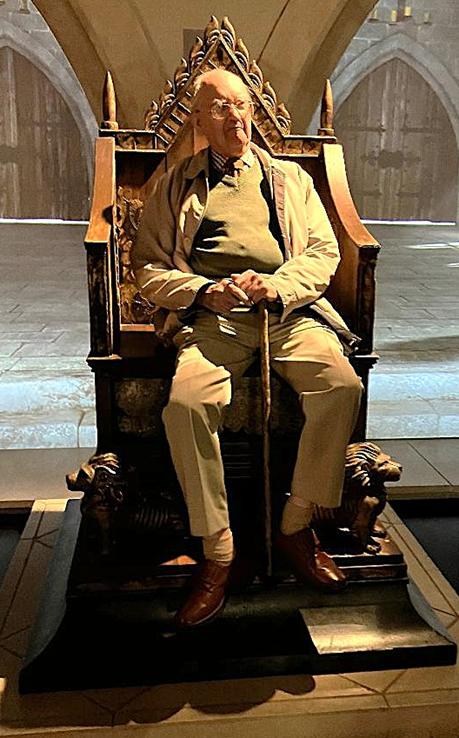
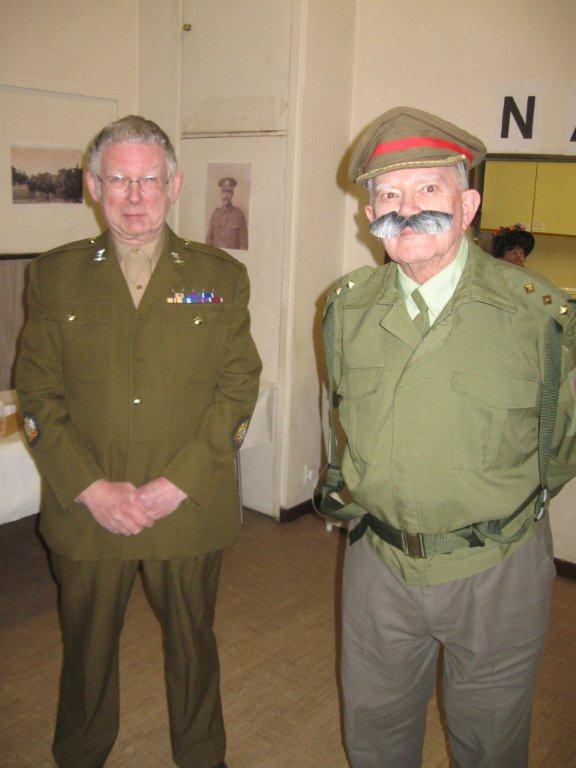
Let us end this tribute with Gordon’s
own words...
Having lived in
the same house in the village for the last sixty years, and being now the
village’s oldest inhabitant, perhaps allows me, with some degree of legitimacy,
to lay claim to the right to attempt the writing of its history. At least there cannot be many others in their
ninety-fifth year conceited enough to believe that others might be persuaded to
dip into it, let alone read anywhere near the whole thing! The preface is at least an excuse to relay
something of a long life which has been mainly taken up with education and history
and time happily spent in the most inviting and charming of villages.
I was born on
September 17th,1931 in a rented house in Bengeo, a former village north-west of Hertford and then a
little later moved to a council house elsewhere in the village. I was the only child of Arthur Benjamin Vowles,
a glove-cutter, and Ellen Mary (nee Pryer). I attended the primary schools in the village
and at the age of eight until 14 was a Newton scholar, an
18th century clothing award founded for poor children – although
Mother would never consider ourselves poor.
At the age of 11 during World War II and the Blitz, being a
non-scholarship boy, I progressed to the one boys’ elementary school in
Hertford, the Cowper School, where I was head boy in my last year, 1944/45.
Instead of
leaving school at the age of 14 for the ‘world of work’, I was surprisingly
given the opportunity to continue my education at the local boys’ grammar
school. How lucky I was, especially as I
was only boy to do so. What a glorious
advance was the Butler Education Act of 1944 since it abolished fees at
secondary state schools and proved transformational for me. I was fortunate, too, that my parents were
prepared to keep me at school until at least 16 and ultimately, as it turned
out, to 18. When my parents died they
left me very little in monetary terms but years earlier they had given me a far
richer legacy (child allowance was not introduced until 1946 and only available
then to families with two or more children).
At the grammar
school I took (and passed well) School and Higher School Certificates earning a
county scholarship and a university place from Hertfordshire LEA. At this point, National Service intervened
and two years in the Royal Artillery were followed by 3 and a
half years in the Reserve of the Essex Yeomanry, but with very little
military activity apart for annual camps.
However, in those days a qualification in Latin was necessary for entry
to Cambridge – later abolished - but I had joined grammar school too late to do
it there. It was thought I could study
for the necessary exam whilst in the Army, but surprisingly self-tuition in a
barrack room did not bring success. At
least the Army tried to help since I was taken off a draft for Korea to take
the exam (this was fortuitous as it turned out, since I had been trained as a
plotter to go out in front of the infantry to direct gunfire onto the enemy and
life expectancy was short). When
National Service ended my Cambridge tutor said he would hold over my place for
further year: I should work for a year whilst engaging a private tutor – he was
obviously keen to have me unusually from an elementary school background rather
than the standard undergraduate from Eton, Winchester or the like!
Accordingly, I
went up to Trinity College, Cambridge in October 1953 to read history, gaining
my BA degree three years later and then a fourth year on a post graduate course
in education. I then taught history for
a further six years at Portsmouth Grammar School before leaving the classroom and
going into education management.
Before that,
however, I had happily married Sylvia and became joyously responsible for my
stepson, Stephen, who had been born posthumously in 1958. We were equally blessed with a daughter,
Hilary, in 1962.
We went north together
for three happy years and I became Assistant Director for Further Education in
the City of York, knowing nothing about further education! It was a brief spell there and we came south
again in 1966 when I obtained a similar post with Bedfordshire LEA. Six years later I transferred within the
department to Assistant Director for Schools and then in 1974 became Deputy
Director for the whole County – with Luton back in the fold – remaining as such
until I retired at the end of 1989. I
thus completed almost a quarter of a century’s service in senior positions with
Bedfordshire County Council.
Retirement
brought a complete change, from then on it was mainly work of a voluntary
nature. Initially, I worked for the
Cambridge University Examinations’ Board on a project in English schools in
Europe and served briefly as a governor of the Cambridge Extra-Mural Board at Madingley Hall. I
was appointed a governor of LEA local schools by the three political parties on
the County Council, which I hope demonstrates I had offered impartial advice
when at work. For a number of years, I
was Chair of Governors at Sandy Upper School and served in a similar capacity
at Hinwick Hall, a Shaftesbury Society college for
disabled young men. I was also a member of the Society’s education
committee.
In Portsmouth,
I had become a part-time tutor for the Workers’ Educational Association and
remained a member for over 50 years, including Eastern Regional Treasurer for
18 years, a member of the national executive committee, instrumental
in the WEA becoming an incorporated body, and then serving two terms as a
trustee.
When I started
teaching, I joined the Historical Association, became treasurer of its Bedford
branch when we moved here and more recently was made a Fellow. Again, on reaching Bedford I joined the
Bedfordshire Historical Record Society and immediately on retirement was
inveigled to become, for ten years, its editor.
These activities brought me into contact with the Bedford history
‘fraternity’. I was commissioned by the
County Council to write the history of the three LEAs in the County to mark
their centenary in 2003. This sparked me
off to do further writing on local history subjects. When working, evening
engagements kept me from becoming much involved in village activities. However, more latterly, I became a member of
the Parish Council and then chairman for nine years – in my eighties. I was a founder member of the Willington
Local History Group, its first treasurer and now president, as well as a
trustee of the Friends of St. Lawrence Church.
Gordon Vowles, MA (Cantab),
PGCE, FHA
September
2026